



Running teaches us resilience, but it also offers an incredible opportunity to learn how to truly listen to our bodies, not just push through them.
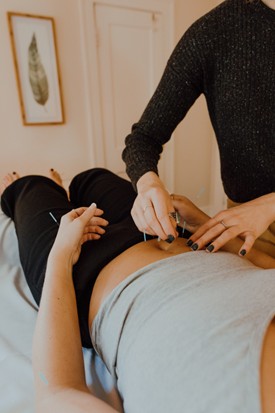
As an acupuncturist, registered nurse, and endurance runner who works closely with women athletes, I see firsthand how often female physiology is misunderstood or oversimplified in endurance training. In clinical practice, I support runners through marathon preparation, injury recovery, hormonal transitions, and the mental and physical demands that come with endurance sport — and I’ve lived many of those experiences myself.
One of the most common themes I encounter is how little education women are given about their hormones and how those hormones interact with training. Many women, myself included, have at some point been told that hormonal birth control was the only solution for menstrual symptoms, cycle irregularity, or training-related fatigue. For some women, birth control is a helpful and appropriate option. But too often, it’s offered without a deeper conversation about how the menstrual cycle works, how hormones like estrogen and progesterone shift across the month, or how training and recovery can be adjusted thoughtfully around those changes. This also includes how training changes during and after pregnancy!
Understanding your cycle isn’t about restriction or limitation — it’s about information. When women understand their physiology, they’re better equipped to train smarter, recover more effectively, and build a healthier, more sustainable relationship with running.
Hormones 101: Estrogen, Progesterone & Training
At different points in the menstrual cycle, levels of two key hormones — estrogen and
progesterone — rise and fall in ways that influence how your body feels and responds to
training:
- Estrogen, which increases in the follicular phase (leading up to ovulation), is generally associated with higher energy levels, increased fat metabolism, and feelings of strength and resilience. Some research indicates that estrogen can help the body use fat more efficiently for fuel — a benefit for endurance work like marathon training.
- Progesterone, which rises after ovulation during the luteal phase, can increase core
temperature, influence heart rate, and shift how your body uses energy. Higher
progesterone is sometimes associated with feelings of fatigue or a slight reduction in exercise tolerance and may influence recovery and temperature regulation.
Importantly, science shows that the effects of these hormones aren’t so dramatic that women can’t train — but they do provide useful context for how you feel on different days. Some studies find only small performance differences across cycle phases, while others show that individuals may perceive exertion and joint stability differently depending on hormone levels.
This doesn’t mean your performance is “bad” during certain phases — it means your body’s internal environment is different, and you can use that information to make training feel more sustainable and supportive.
Training Through the Cycle: Practice With Purpose
When I pay attention to my own cycle now, it looks like this in practice:
- During the follicular phase (when estrogen is rising), I might feel more energetic and
- ready for harder workouts.
- Around ovulation, strength and coordination can feel strong — a great time for quality sessions or moderate speed work.
- In the luteal phase (when progesterone is higher), I’m more intentional about recovery, hydration, and sleep — especially in back-to-back training weeks.
- On my period, I often choose slightly easier efforts, longer warm-ups, extra fueling, and deeper rest — not to stop moving, but to support my body’s shifting needs.
Adjusting this way doesn’t limit my training, it enhances its sustainability and helps prevent burnout. And I’ve found that using acupuncture has been such a useful tool for balancing my own hormones as well as my patient’s so we can continue doing what we love!
Recovery Is Strategic — Not Optional
Recovery isn’t passive — it’s where adaptation happens. Quality sleep, intentional fueling, nervous system regulation, and rest are all part of what makes your training stick. You may have read my previous Grandma’s Marathon piece on recovery — My Favorite Holistic Tips for Recovery as an Athlete and Acupuncturist — where I share actionable approaches like breathwork, manual therapies, strength training, and sleep strategies that support both performance and long-term health.
These tools help your body regulate stress hormones and support circulation, muscle repair, sleep quality, and immune function — all of which influence your body’s ability to train consistently and for the long haul!
Women Run Through Life Stages — and You Get Stronger for It
The conversation about hormones doesn’t stop at the menstrual cycle. As women move into perimenopause and menopause, shifts in estrogen and progesterone are more pronounced and can influence sleep, recovery speed, thermoregulation, bone density, and muscle mass.
Here’s how I’ve found my patients can find success:
- In perimenopause, prioritizing strength training helps support muscle mass and bone density as estrogen begins to fluctuate more widely.
- In menopause, continued strength work, adequate protein, and mindful recovery become even more powerful tools for preserving running performance and overall vitality.
These changes aren’t signs of decline! They’re truly just opportunities to adapt your training thoughtfully and stay connected to what your body truly needs.
Final Thoughts: Running as a Dialogue With Your Body
Running any of the races during Grandma’s weekend is an amazing goal and one that deserves joy, respect for your body, and intelligent adaptation. Women’s health is not one idea but a lifetime of evolving experiences and paying attention to your internal rhythms gives you valuable feedback on how to train with your physiology, instead of against it.
Your hormones aren’t obstacles. Rather, they are allies in performance, recovery, and long-term wellbeing.
If you want additional ways to integrate cycle awareness into your training, or want help exploring individualized strategies such as during and after pregnancy, I’d be honored to support you.
Extra Resources
If you’d like to continue learning about women’s health, hormones, and sustainable endurance training, my parter, Jacob Oak, and I have shared many episodes on our We Get 2 Do This podcast for you to explore! Here are a few I recommend:
- Postpartum Running, PT, and Women’s Health w/ Courtney Tanaka
A foundational conversation on female physiology, training stress, and performance across the lifespan.
👉 https://open.spotify.com/episode/3OYF6ahLGSj1yh6MCej43J
- Menopause Should Not Mean Suffering w/ Sara Larson
A practical discussion on understanding menopause
👉 https://open.spotify.com/episode/72Hu1xTurDeCHriIIRGrfA
- Holistic Health for Runners: Kailee’s Live Talk at Stride de She Camp
Covers recovery, nervous system regulation, and whole-body support for endurance athletes.
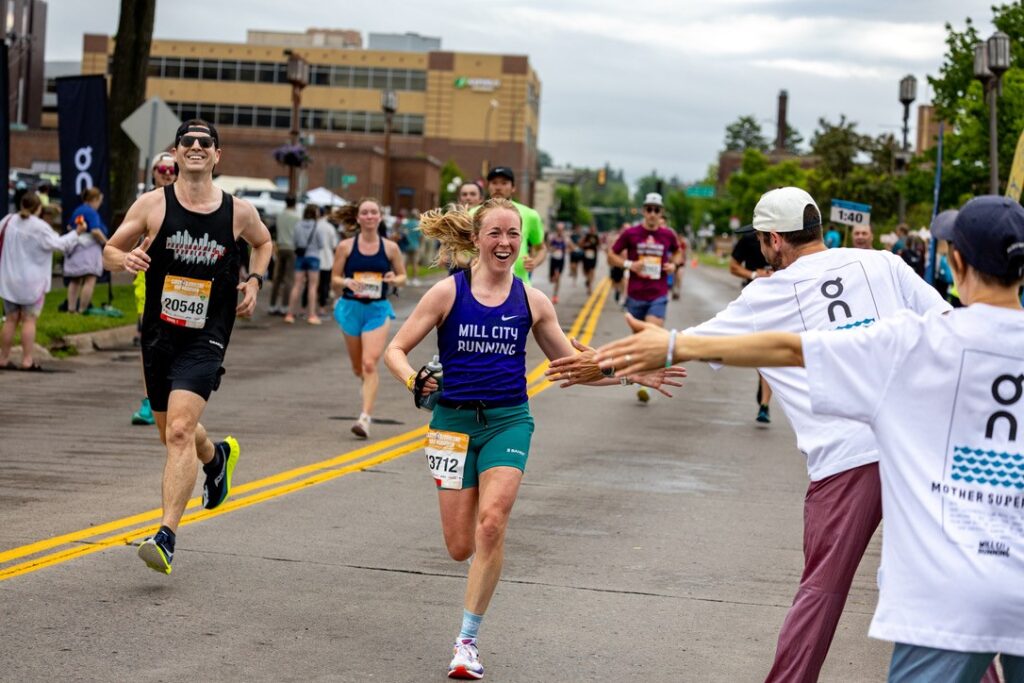
Kailee Carlson
Follow Her on: Instagram
Favorite Grandma’s Marathon Memory: Grandma’s 2012! My first marathon with my mom, right after high school. Longest training run? 8 miles. Fueling plan? Nonexistent. What got me through? Pure hope, excitement, vibes from everyone cheering, and my mom’s encouragement. This race was a catalyst into making me the runner I am today and a reminder that I can do anything I set my mind to!
Quote that guides, inspires, or embodies your training, racing, or life:
“We GET 2 do this.” It inspired the name of my podcast with my fiance, Jacob Oak, and is a reminder I carry with me in running and in life—that movement is a privilege, and even on the hard days, I choose to show up with gratitude.
Three words to describe your training, racing, or life: Grateful. Resilient. Consistent.
Favorite post-race beverage:
An iced caramel or honey lavender latte with light ice!
Song that must be on your running playlist: Year 3000 by the Jonas Brothers—this song holds so many great memories and is the one we blasted and danced to during the final lap of my 200-miler. Something I will never forget!