



















Introduction
“I’m just telling you now, I’m going to run almost perfect nine-o-nines for every split. Sorry to say it, but most of you won’t be able to hang with me the whole time.”
Who is this asshole? I thought to myself, looking the lithe, besunglassed man sporting a buzzcut and a singlet up and down. The problem was, I already knew exactly who he was and I didn’t like the answer one bit. He was my pacer for the Sioux Falls Marathon, and a few miles in, as he channeled his inner Elphaba and tried defying gravity, slowing down a pack of runners on the way down a steep hill, I abandoned his useless butt and struck out on my own.
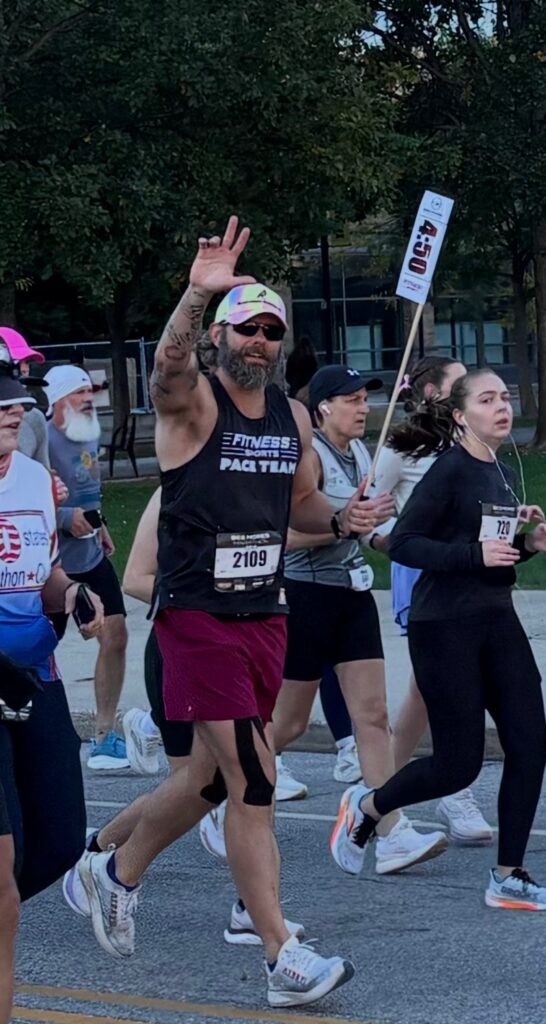
To be a pacer is a privilege. It’s how a lot of seasoned marathon runners, including myself, like to give back to the sport that invariably gives us all so much. But it may be valuable to know that not all pacers are created equally. Some—like those you can expect at Grandma’s—are highly experienced and well-coached, while others are just in it for the sexy singlet and free race entry. What you’ll have at Grandma’s should be on par with KC, Des Moines, and other great races in the Midwest. So, as much as I want to talk about the jackass with bunny ears and a boom box who hopped around the course decidedly not pacing me a few years back, this post will focus on what you can expect from your excellent pacers and how to get the most out of what they have to offer. Here are some things to think about when thinking about using a pacer.
Communicate
Before the gun ever goes off, talk to your pacer. They should want to talk to you. They’re there to help you, after all. Find out if they are walking the aid stations. While that’s ideal, it’s not always practical due to the setup of a course, the pace your group is moving at, etc. Hopefully your pacer has been coached to give you an “even effort” experience, moving slower up the hills, faster down the other side, and conserving energy whenever possible. Find these things out. Whatever your pacer is planning to do, you’ll be glad you know in advance. Knowing their name is helpful, too. They won’t be listening to music, and you can ask them questions that arise on the course if needed.
Listen…or Don’t
I’m a rather loquacious pacer, and I let my pace group know what we’re doing. Over the course of a four-hour marathon or more, I can get hoarse from how much I talk to my group. Your pacer probably won’t talk quite that much, but they should tell you the big stuff like “We’re going to walk this aid station for twenty seconds,” or “that split was a touch fast so we’ve banked four seconds.” Regardless, you can listen to them…or not. I never mind one bit when people I’m pacing tune me out, turn their music on, etc. I’m still there running, and you can absolutely jam out to Kendrick Lamar while running alongside your pacer. You do you.
Adapt to The Day
You’ve been training hard for this race for sixteen weeks, maybe more. You have high hopes and big goals. A week out, it looks like the gun time will be close to seventy and by the finish, maybe ninety. Aside from cursing global climate change, what do you do? You can adapt.
It can be frustrating to realize that race day didn’t coincide with peak conditions, or that you didn’t do everything you could have to be ready, but being realistic gives you the best chance to run your best race. There are three questions you need to ask on race day morning: What’s the weather like? Am I trained for this the way I want to be? And did I poop?
As far as weather goes, if conditions are optimal you’re really lucky, because so often they aren’t. As a coach, I ask my runners “Is this a PR day?” and often we would revert to our “B goal” before the race even began. If you’re capable of qualifying for Boston in forty degrees and it’s sixty-eight at the start, you may have to find another race to BQ with. Adapting to the weather by being realistic gives you the best chance to have your best race.
As far as training goes, you don’t have to wait for race morning, you just have to be honest with yourself, and run a pace you’re trained to run. The morning of the race, it’s easy to get caught in the adrenaline of the moment and move up a pace group “just to see” at the last minute. This almost never works out. Stick to your plan, run your race, and you’ll have the best possible day.
As for poop, it’s really about how you feel. If you don’t have a bowel movement or you’re coming off of the flu or you turned your ankle playing basketball the night before (you idiot), adapt to how you feel that day. It’s ok to go out with a slower pace group and catch up to a faster one if you find you’ve underestimated yourself, but going out too fast—especially if you’re not feeling great—will create a problem you can’t fix.
Start Slow
As Amby Burfoot writes in his book Run Forever, speed kills. As a longtime cross country coach, I’d remind my athletes often that you can’t win the race in the first mile but you can sure lose it. To put that another way, if you use more than ten percent of your energy in the first ten percent of the race, you’re screwed. And for those who are running their first marathon, first, congratulations, and second, please remember that the race begins at mile twenty, and you want to feel like you can still run a race when you get that far.
So how does this relate to pacing? At Grandma’s in 2022, I was trained to run a four-hour marathon on a really good day. We had fine weather, but the pace groups available were 3:50 and 4:05, and despite what should have been obvious I went out with the 3:50 group. It was faster than I could maintain, and I fell off that group around mile sixteen. By mile twenty-two, the 4:05 group was passing me. I finished around 4:09. Had I started with the 4:05 group, I might have had enough in the tank to kick at the end, and even if not, I would have had better results if I had been smart enough to start slow.
Get Drafted
Ok, not a great pun when the United States is deposing world leaders at a rate of one per month, I’ll admit, I just couldn’t come up with anything clever related to draft beer. But what I really want you to do is to draft (Rough draft? Final draft? Is it drafty in here?) off of your pacer if the conditions call for it.
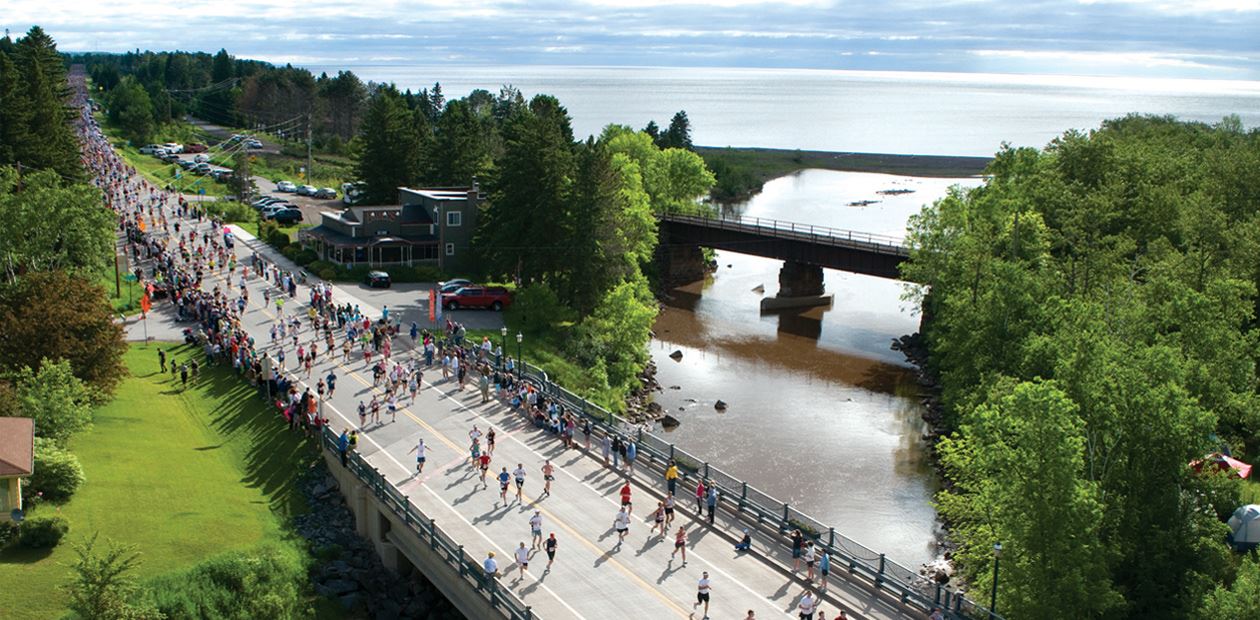
On a still day, ideally you’ll match your pacer’s footfalls one for one, get into a steady rhythm, and hold it for thirty-thousand steps. But on a windy day—which is not at all uncommon running alongside one of the world’s largest lakes—the best idea is to draft off of your pacer.
Think of the peloton in the Tour de France. Each cyclist is doing much less work than they would be on their own as the swarm of riders pulls everyone along. This is why the GC rider is selected in advance for each team, and how their teammates support them. If you can tuck into the pace group when the wind picks up, it will impact you less. This is another great reason to start slow, so that there’s less risk of falling out of the group.
Go with the Flow
The psychologist Mihaly Czikszentmihalyi explains flow state as the “optimal experience” or being “in the zone,” characterized by intense concentration, the merging of action and awareness, and losing a sense of time. One great thing that pacers allow you to do is stop thinking. You don’t have to check your watch for splits, or contemplate the aid stations, or control for pace. If you’re working alongside a great pacer—even a good one—they’ll do all of that and more, so all you have to do is run. Just run. This allows you not to exhaust the mental capacity that you need in order to succeed in the mental part of the race, around the final 10K, when your body is shot and only your brain is left to urge you forward. Lock on to your pacer, and go with the flow.
Follow up
Reaching out to the race director afterward to tell them how great your pacer was is a nice thing to do and may get them invited back in the future. Also, reach out to the pacer if you’re so inclined. I have so many Instagram and Strava contacts who I met pacing. I love it when they comment on my runs and when I get to see what races they’re doing next. Not everyone wants to add you to their social media, but runners are generally pretty cool and often enough I even run into them again at other races, which is fun.
Conclusion
I’ve paced something like fifty races since I started a decade ago, and I’ve come to love it and view it as one of the most significant ways I can give back to our amazing sport. Furthermore, when I’m racing for time, I love to use a pacer. Twice last year at the age of 43 I set new PR’s, the first time in Houston and the second in Omaha, using terrific pacers. In the end, there’s some risk involved; it’s disheartening to fall out of a pace team, and it gets even worse when the pace group behind the one you started with passes you because you ran out of gas. But the rewards outweigh the risks and if you take even some of the advice above there’s far less chance of that happening.
In the end, having a good pacer and using them wisely will give you the best chance to run the best race you are capable of running. And just remember, finishing a marathon at all makes you an absolute rock star (sorry Ozzy), and you’ll feel a lot more like a rockstar if you run your race wisely. I hope to see you at the starting line—and the finish.

Mark Gudgel
Follow Him on: Instagram
Favorite Grandma’s Marathon Memory: Last year was wild. We had a wonderful lodge on the lake that we all stayed in, cooking and hanging out. It was great. The morning of the race, we got in the car and a tree had fallen across the road. We were sure we’d miss it but my friends–both South African–decided they could drive around the down tree and somehow did. I was wearing the bib of my friend Steve, who I was going to guide in the race (he’s visually impaired) before he wound up needing a surgery. It was an honor to wear it for him. Then at the race. I ran into another friend who I knew was going to be at the race and we did almost twenty-three miles together. Afterward, my family joined me in the VIP tent. In all, my memories from last year are numerous and so great that I knew I needed to come back for the 50th.
Reason you absolutely won’t run outside: It would take nuclear war. Or strong wind. I hate wind.
Three words to describe your training, racing, or life: Need not want.
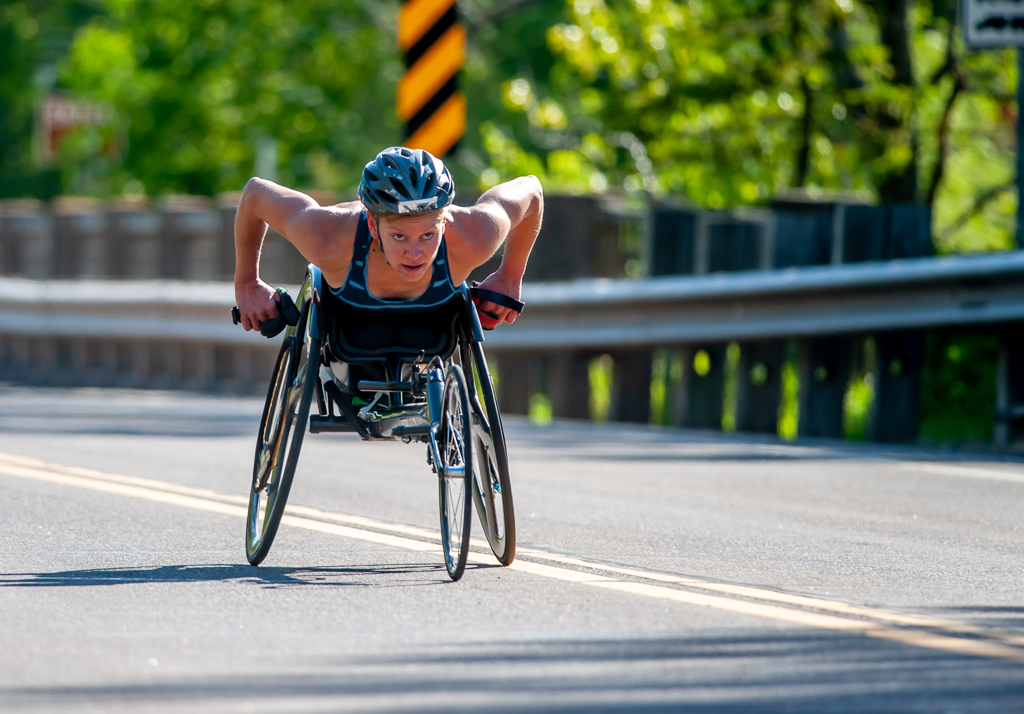
Advice to other runners: Running is the only things humans are physically good at. We’re terrible swimmers, horrible climbers, can’t fly at all. But we are the greatest long-distance running creature ever to evolve. This is what we evolved to do, and it may look different when some of us do it, using blades or wheels or guides, but we can all do it. So do it.