I told myself it wasn’t getting worse. It wasn’t getting worse… But I was 22, invincible, and fully in my David Goggins era. My IT Band had other plans.
*****
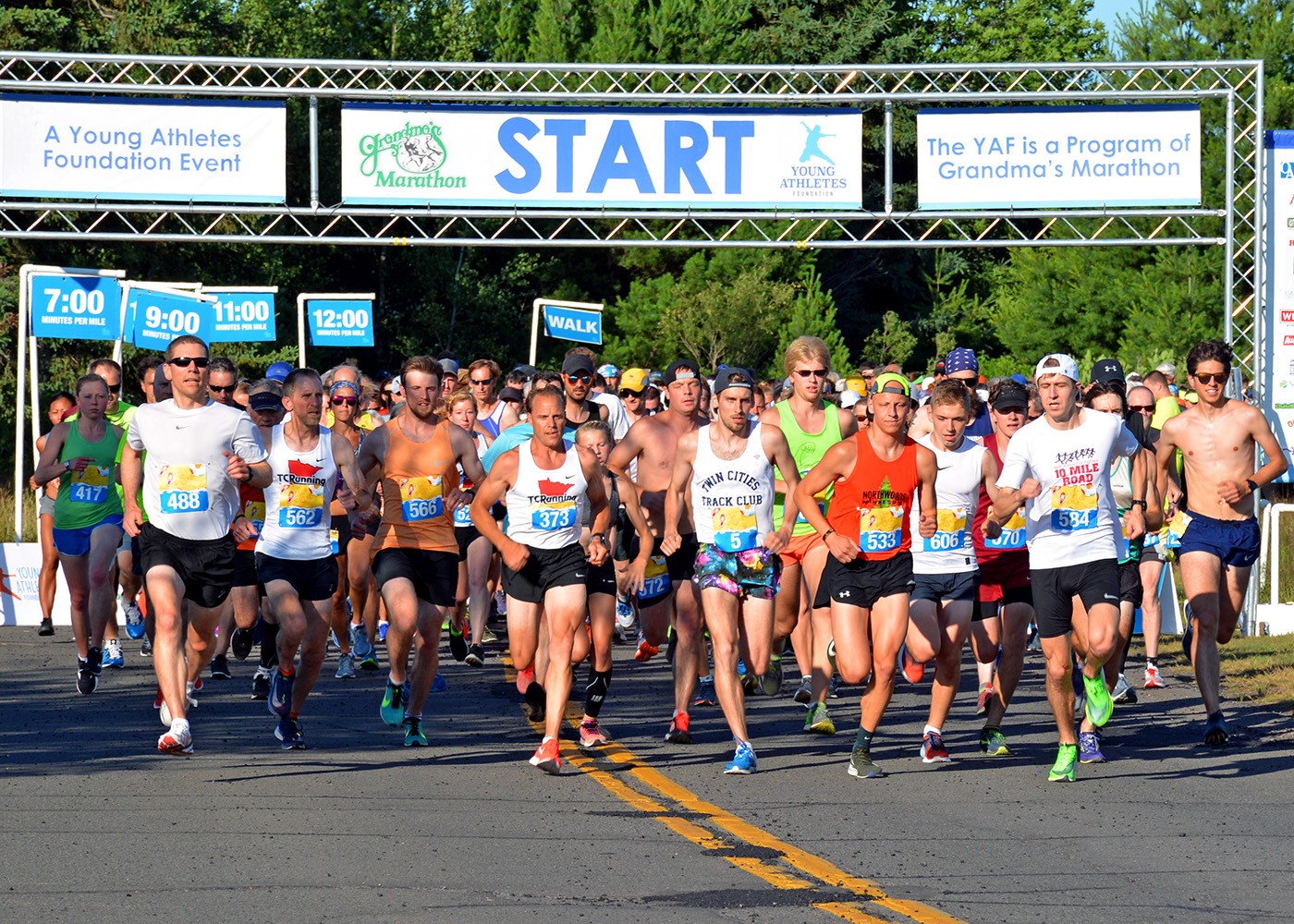
It’s the end of March/the start of April in 2021 and I’m roughly 14 weeks out from my first official Grandma’s Marathon weekend. I was supposed to run it the year prior, but that was 2020 and the year everything shut down. Lucky for me, I was able to take advantage of that year and especially of the winter prior to what was going to be my 5th full marathon race. Logging miles felt effortless, and I was more excited than ever to start getting outside more and more; I had even started to implement strength training for runners back into my routine and was very confident about officially breaking 4 hours for the first time in the road distance. The treadmill had become my best friend, and I had pretty much run exclusively on it over the entire winter.
As it started to warm up, I moved my entire training outside to the asphalt or gravel roads without any transition. If I remember correctly, I was likely doing about 25-35 miles a week on tread, but now it had been at least 2-3 weeks completely outside and I was building that mileage up more and more. Some people follow a progressive 10% rule and may even alternate the treadmill with the road as they ease back into more outdoor miles in a marathon prep. Not me though, I was way too strong for doing things that way. No pain, no gain. I was invincible and had never had any issues with running through any type of discomfort, swelling, bruising, sharp/shooting pains thus far in my run training years.
As I got out of bed, I couldn’t help but notice the discomfort/tightness in my left outer knee that had been lingering for about a week now. I was 22 at the time and fully in my David Goggins era; so, I thought I was quite unstoppable and could power through anything and it would eventually go away. But still, this one felt a little different and no matter how much I iced it and kept it elevated when not running, it seemed to keep getting worse. If someone had asked me prior to the run, I’d explain that it was probably about a 5-6/10 on the discomfort/pain scale and that as I ran it seemed to get a little worse throughout it. Especially as I ran further, but it wasn’t anything I couldn’t handle, of course.
I threw on my shoes, went out the door without warming up or stretching, and started to run on the uneven gravel surface of the road I lived on at the time. I remember feeling like if I just ran/landed slightly different than I normally did that the pain would go down. So, it definitely wasn’t getting worse while I ran… Or so I told myself. As the run concluded, it would hurt to slow down, but there would be an absolute feeling of relief knowing I was done and off it for the day.
I headed inside and grabbed some ICE, a tradition I had deemed as normal with the extra discomfort in my knee as of late and used the rails as I kept pressuring off my leg heading downstairs to my basement office to start work for the day. My knee felt almost numb and tingly, but I once again ignored the warning sign. I’d ice it throughout the entire day to make sure it didn’t swell and continued to believe that I could run through it, and the next day would be different.
I’m not entirely sure if it was the next day or a few days later, but I continued running and the knee did in fact get worse and worse. My distinct memory of acceptance of an injury came when I was still trying to run through an 8-9/10 pain and my left knee completely gave out and buckled causing me to almost fall and forcing me to limp home. At this point, I finally knew that something was definitely wrong with my knee and that it was time to seek the help of a professional. What a hit to the ego this was. I didn’t need the help of anyone else; I was way too smart and tough for that. So far, I was fine doing everything alone and I had even become a little bit of a subject matter expert in this realm since I had now worked with 5 runners of my own, as a coach, to help them hit their own goals.
Unfortunately, I had waited too long, and some wicked damage had been done to my left knee/IT Band. It would be 3 months until I started a run/walk program and a full 6 until I was back to running 15-20 miles, continuously, per week.
Injuries are hard; especially when it’s the first major one we have ever dealt with. They take a toll on us physically by breaking down our bodies further than we want them to go, but they also mentally mess with us as they take away our escape, stress reliever, ability to connect with community through run groups, and maybe even our sense of purpose at times. For this specific example, it was also quite a hit to my ego as I stated above. I’ve dealt with my fair share of injuries. The one above was hands down the worst one I had ever dealt with.
If only I had been more proactive and listened to the warning signs of what my body was telling me… can you identify what they were? They weren’t your typical soreness signals in the body. I even bolded most of them above! J
Pain vs Soreness – Injury Mitigation and Performance for Endurance Athletes
Generally speaking, soreness is an ache and should feel much better as you get warmed up. By the end of a workout, you should actually feel much better than when you started and it is very rarely just on one side of your body.
Below is a common list of items that I now follow religiously in identifying if something is off with my body. They are not listed in any particular order, and you could have one thing going on or multiple.
- Pain/discomfort that lingers for more than 3-5 days, MAX. Without any sign of improvement.
- Pain of 3-5+ on a 1/10 scale (10 being unbearable). It is a range because we all experience pain differently.
- Pain that gets worse or doesn’t improve during a workout/movement.
- Symptoms that feel sharp, stabbing, shooting, burning, numb, tingly, causes you to change your gait, a locking/giving out feeling, etc.
- Localized to one area and may even look bruised or off in some way. Something like a stress/bone fracture is going to feel deep in the body.
- Soreness is typically on both sides of the body whereas injuries happen/are worse on one.
I’m going to list these last two items separately because they seem like easy things to listen to, but I’ve actually found that they may be the hardest to follow because they are typically an even bigger hit to ego/force you to really accept what is going on with your body.
- The 60 second hop test: can you hop on one leg for 60 seconds? If the answer is no, I can almost guarantee that you shouldn’t run on it.
- Do you feel it while you are walking, going up stairs, going downstairs, standing up, doing other non-running activities that are much easier on your body than running? If the answer is no, I can almost guarantee that you shouldn’t run on it.
One thing worth noting: a lot of IT Band issues and similar injuries show up or get significantly worse when proper strength training for runners isn’t part of the routine. It was one of the things I added, too late and it’s now a non-negotiable part of how I coach every endurance athlete I work with.
Consulting a professional/other resources
It can be very hard to find a team of practitioners that understand both the physical and mental demands of running. It’s taken me years to find people that I trust from an education standpoint, but also from a personal experience of endurance sports of their own standpoint. When I developed the injury above, it was extremely hard to find someone that was both an endurance athlete themselves but also knew how to treat the body from both a holistic and localized standpoint. Another truth of the matter is that depending on the issue, you may need someone different/a different modality. Tools like 3D gait analysis have also been a game changer in identifying movement patterns that contribute to injury before they become a bigger problem. Below are a few things I recommend when looking for a practitioner to help with whatever you are going through. If you want more specific help in finding someone to help, please do not hesitate to reach out and I can likely help point you in the right direction!
- They have personal experience as an endurance athlete
- They have education/certifications in what they are doing
- They have reviews to back their work up helping people
- They are not afraid to admit if they do not know something/refer out to another practitioner
I wish I had built that team long before my knee gave out on me. Having people in your corner who genuinely get you, and all aspects of this sport, changes everything about how you navigate the hard stretches.
Injuries are hard, but we will all deal with them at some point in our training lives. No matter how much you strength train, how healthy you eat, how much sleep you get, how perfect you are, etc. They are bound to happen at some point and whether it is a short one or a long one, I hope you are able to find relief knowing that you are not the first to go through an injury and that they can also serve as learning lessons and even time to focus on other areas of our lives that may have been forgotten about due to our training. I think it is so valuable to build a team of people around you that you trust that can help you through both the physical and mental side of this sport.
As always, please do not hesitate to reach out if you need help!
*****




















 What’s the point if it no longer is fun for you? (unless you’re getting paid to run I guess…)