




Ten marathons in, and my race day packing list keeps getting shorter, not longer.
I used to think more gear meant better races. Another gel pocket. Another gadget. Another thing I saw another runner wearing and thought I should probably have too. After a decade of racing, two kids, and a postpartum comeback that taught me more than any training plan ever did, I’ve figured out that the best race day setup is the one you can actually rely on. No extras. No experiments. No “I think this will work.”
READ OTHER BLOG: Training Through the Chaos: How I Prepped for Grandma’s Marathon with Toddlers in Tow
Just the things that have earned their spot.
Here are the 8 marathon must haves I swear by, plus one I’m adding for the first time at Grandma’s 2026.
What are the real must haves for a marathon?
The essentials for race day are proper carb fueling (around 24g every 35 minutes works for me), electrolytes, reliable running shoes you’ve already logged miles in, comfortable shorts with gel storage, Balega socks, a collapsible water bottle, tested headphones (optional but powerful), and a mantra or hype song for the hard miles.
That’s it. Everything else is a bonus.
Let me walk you through each one, because the “why” matters more than the “what.”
1. Proper Fueling (and Why I Finally Got Serious About It)
For my first nine marathons, I fueled with Clif Bloks Energy Chews. Which sounds fine on paper, except my dirty little secret was I’d get through maybe two whole packs across the entire race. Two. Over 26.2 miles.
I kept wondering why I was hitting walls at mile 20. Revolutionary insight, I know.
For marathon number 10, I got serious. I bumped my intake to 24 grams of carbs every 35 minutes, and the difference was night and day. More energy through the back half. Less fade. Fewer “why did I sign up for this” thoughts at mile 22.
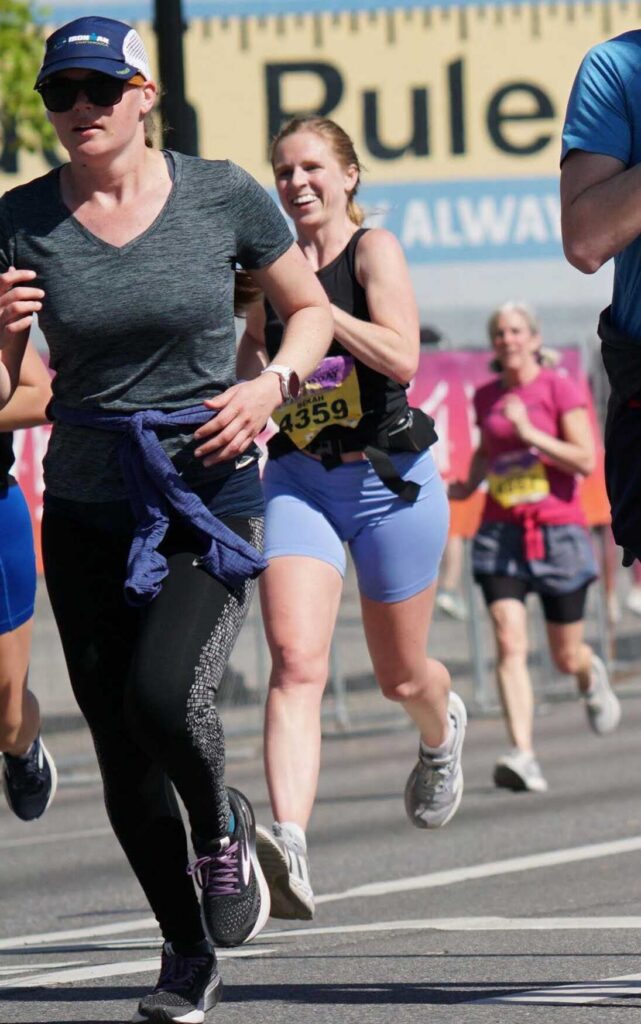
The lesson: You cannot run a marathon on vibes and one pack of chews. Fuel early (I even take one before the race), fuel often, and do it on a schedule, not when you “feel like it.” By the time you feel like it, you’re already behind.
Practice your fueling strategy on your long runs. Race day is not the time to find out your stomach hates a new brand of gels.
2. Electrolytes (Not Just Water)
Water alone is not enough, especially if race day turns hot. I learned this the hard way when my last marathon ended up significantly warmer than forecast, and even taking water and electrolytes at every single aid station was barely keeping me afloat.
My current go-to is Tailwind Nutrition and I use a collapsable water bottle I can shove in my shorts pockets. I like that it combines carbs and electrolytes in one, so it does double duty in my water bottle. Easy on the stomach, no weird aftertaste, and it’s saved me on more than one hot long run.
Whatever you choose, test it during training. Tailwind, LMNT, Nuun, salt tabs, pick your fighter. Just know what works for your body before mile 18 forces you to find out.
3. Shoes You’ve Actually Tested
Story time.
For marathon 10, I decided to race in supershoes. I’d trained in them a handful of times. One long run left my calves screaming so badly I waded into a river mid-run to cool them down. Reader, I wore them on race day anyway.
By mile 6, my calves were on fire. I had 20 miles left. I finished that race through sheer stubbornness and a lot of pace adjustments, and while I’m proud of the BQ I pulled out of it, I would not recommend my approach.
The takeaway: Your race day shoes should be the ones that carried you through at least two or three of your longest training runs without issue. Not the ones that promise to make you faster. Not the ones your friend swears by. The ones your feet already trust.
Progress over perfection applies to gear too. The shoe that’s actually on your feet doing the miles wins every time.
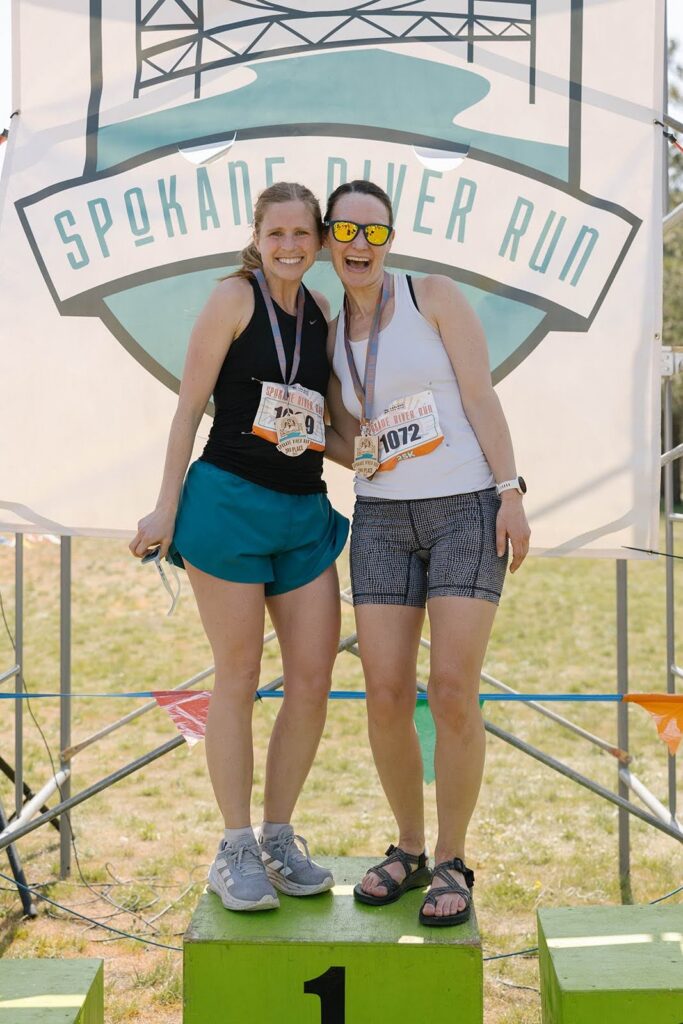
4. Comfortable Shorts With Gel Storage
You might not look cute. That’s fine. Cute has never once helped me finish a marathon.
What matters is that your shorts don’t ride up, don’t chafe, and can hold your gels (or chews, or whatever you’re fueling with). If you have to stop every mile to readjust something or fish a gel out of a weird spot, you’re losing time and energy.
I’ve tried lots of brands over the years. My advice is to find one pair that works, buy a second pair in the same style, and stop shopping. Race day is not for experimentation.
If your shorts can hold four to six gels without bouncing around, you’re winning.
5. A Collapsible Water Bottle
Aid stations are wonderful. They are also not always where you need them to be.
I love racing with a collapsible water bottle, especially if the weather is trending warm or if I’m worried about the spacing between stations. It tucks away when it’s empty, which means it’s not a burden once I’ve gotten rolling and the heat isn’t as bad.
A handheld bottle or a soft flask in your shorts pocket works too. The point is having something that gives you options. On that hot race day I mentioned, I was grateful for every sip I had between aid stations.
Pro tip: fill it with your electrolyte mix, not plain water. Make that bottle work twice as hard.
6. Balega Socks
I will die on this hill. Balega socks are the only socks I will race in.
After ten marathons, I’ve tested plenty of brands. Blisters at mile 8 can end a race faster than bad weather or a bad fueling plan. The right sock is one of those things you don’t think about when it’s working, and cannot stop thinking about when it isn’t.
Find your sock. Buy four or five pairs. Wash them gently. Never race in something you haven’t already put 20+ miles on.
7. Shokz Headphones (My First-Time Addition for Grandma’s 2026)
This one is new for me. After 10 marathons without music, I’m finally racing with headphones at Grandma’s in 2026, and I chose Shokz.
I’ve been training with them for months, listening to audiobooks on easy runs and long runs, and the open-ear design has won me over. They don’t fall out. They stay put through sweat. And because they don’t block out ambient sound, I can still hear cars, other runners, and the spectator yelling my name at mile 18.
If you’re considering running with music or audiobooks for the first time, these are the pair I’ve landed on. Train in them first. Know what volume works for you. Know how long the battery lasts. The last thing you want is your “I’m going to crush this race” playlist dying at mile 15.
8. A Mantra (and a Hype Song for the Hard Miles)
This is the one thing on the list that doesn’t go in your shorts pocket, and it might be the most important.
Somewhere between mile 20 and mile 26, your legs are going to start negotiating with your brain. You need something to come back to when that happens. A phrase. A song. A reason. Ideally all three.
My go-tos:
- “Crest, don’t rest” for any uphill, but especially Lemondrop Hill at Grandma’s. You don’t slow down at the top, you push through it.
- “Pain is temporary, your time is forever” for the miles when everything hurts and I’m tempted to back off the pace.
- “I Need You” by OBB is my hype song. When the wheels start coming off, I sing it in my head (and sometimes out loud, sorry to the runners around me).
Pick something that actually means something to you. Generic motivational quotes will not save you at mile 22. Something personal, something rhythmic, something you can call up when your brain goes to that dark place. That is what gets you to the finish line.
What I Intentionally Skip
As much as this is a list of what to bring, I want to name what I don’t bring, because minimalism is the whole point.
I don’t race with a fuel belt (my shorts do the work). I don’t race with backup shoes, a second shirt, or anti-chafe products (I’m lucky, my body just doesn’t chafe).
If something isn’t earning its place on race day, it doesn’t come. Every extra ounce is an extra ounce your legs have to carry 26.2 miles. Keep it simple.
The Real Must Have: Showing Up
I’m going to get sincere on you for a second, because this is where running and the rest of my life collide.
The biggest must have for any marathon isn’t in your shorts pocket. It’s the consistency of showing up for training runs when you’re tired, postpartum, busy, or just not feeling it. It’s the willingness to do imperfect miles, because imperfect miles still build endurance. It’s making peace with the fact that this season of training might look nothing like the last one, and that’s okay.
The gear supports the work. The work is what gets you across the finish line.
Final Thoughts for Race Day
If you remember nothing else from this list, remember this: test everything in training. Your fuel, your shoes, your socks, your shorts, your headphones, your electrolytes. Race day is for executing, not experimenting.
Eight things. That’s all you need. Fuel, electrolytes, tested shoes, comfortable shorts, a water bottle, Balega socks, Shokz headphones (my new addition), and a mantra for the miles that test you.
Everything else is noise.
Hoping to see you at the finish line soon!
Bekah Read is a 2026 Grandma’s Marathon ambassador, a web designer, and a mom of two based in Des Moines, Iowa. She has run 10 marathons and is chasing her New York qualifying time at Grandma’s in 2026. Follow along on Instagram at @ReadsRun.
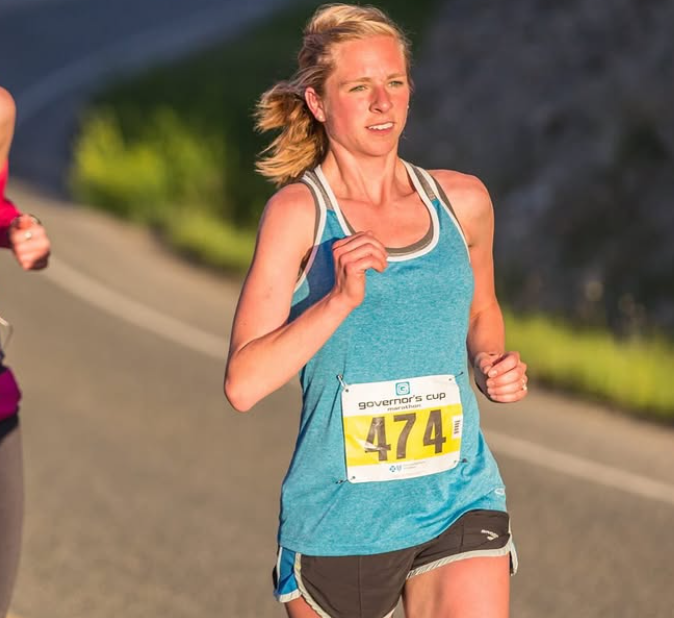
Bekah Read
Follow Her on: Instagram
Favorite Grandma’s Marathon Memory: Running my first marathon postpartum alongside my sister-in-law, who was completing her first 26.2. We crossed the finish line and I was completely exhausted, so proud of her, and full of emotion for what I had accomplished with a 1 and 2 year old. That race reminded me that I can do hard things, even in the middle of motherhood and messy seasons.
Three Words to Describe Your Training: Scrappy, Purposeful, Faith-Fueled
Advice to Other Runners:
You don’t have to wait for life to calm down before chasing a big goal. Whether you’re running between nap times or late-night deadlines, every mile matters. Keep showing up, give yourself grace, and trust the process, you’re stronger than you think.
Quote That Guides or Inspires You: “Progress over perfection.”